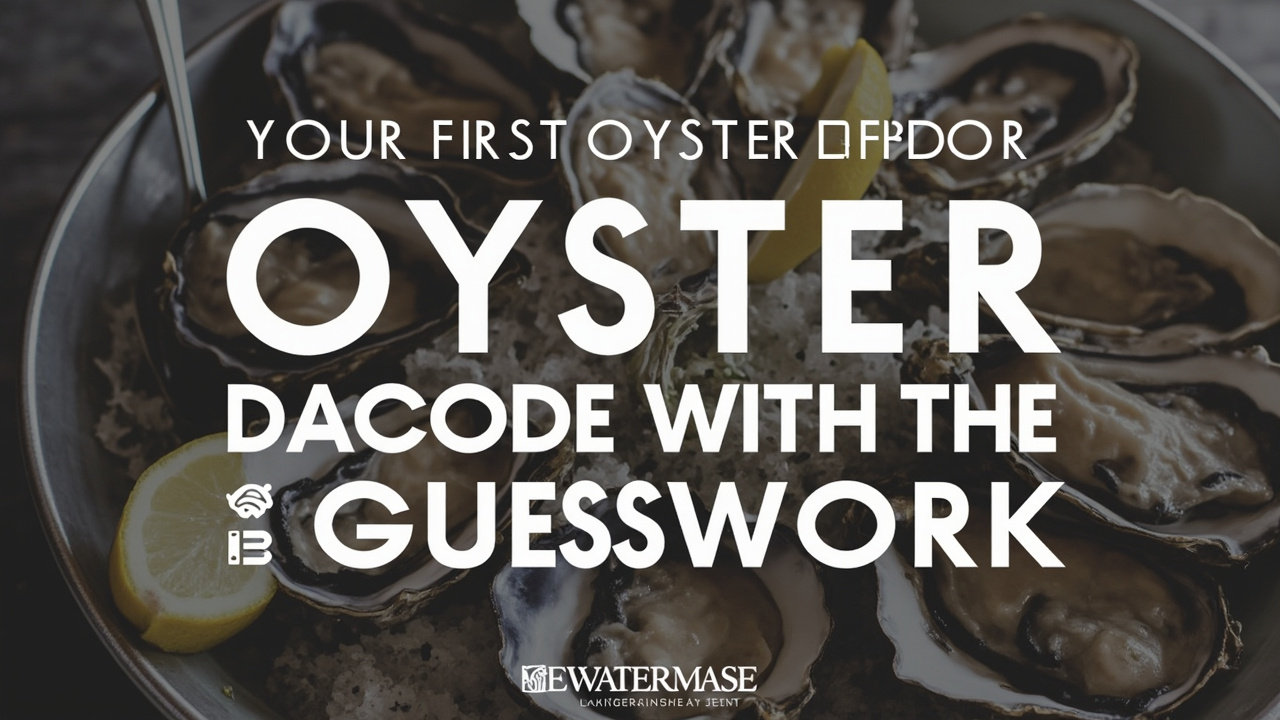
An oyster menu can look like a wine list suddenly started speaking in seafood. Blue Point, Pemaquid, Bombazine: memorable names, but not much help when all you want is a good plate.
This oyster ordering guide offers a simpler way in. Start with the flavor and texture you prefer, use those preferences to narrow the list, and ask for help when the menu remains opaque. The glamorous ice tower can stay. Your confidence does too.
Oyster names identify varieties, but variety and origin can also affect flavor and texture. The useful filters are briny versus creamy and lean versus meaty. A dedicated raw bar may also provide more guidance than a casual restaurant with only a few options on its menu.
Start with two decisions, not the entire menu
Oysters come in a broad range of flavors. Some lean briny, with the taste of a gulp of fresh salt water. Others are creamy and almost sweet. Neither style is automatically better. The right choice depends on what you want from the plate and how you prefer to eat.
Texture deserves equal attention. A lean oyster may feel lighter and easier to swallow, while a meaty oyster offers more heft. Decide whether richness or lightness sounds better before considering individual names.
These are two separate decisions. Flavor and texture should be considered independently rather than assuming that a briny oyster must also be lean or that a creamy one must be meaty. Once you have picked a direction on both scales, the menu becomes much easier to read.
The two scales that simplify the list
Think **briny to creamy** for flavor and **lean to meaty** for texture. Those broad categories are enough to make a useful first cut even when every oyster has an unfamiliar name.
They are not a quality contest. A strongly briny oyster may suit someone who wants the taste of the sea to stand out. A creamy oyster may suit someone who prefers a softer, sweeter expression of flavor. The same distinction applies to body: lean favors lightness, while meaty favors substance.
This distinction is what lets you order without pretending that every variety fits neatly into a single box. It also gives the person serving you something more useful than “give me the best one.”
Use preferences as the bridge between menu and server
Begin with the direction you want. Then ask which varieties on the current menu fit that description. At a dedicated raw bar, an oyster expert can be especially valuable because detailed guidance is less commonly available than it is at a wine bar with a sommelier.
If an oyster expert is available, ask for recommendations based on both flavor and texture. That is more precise than asking for a single “best” oyster, and it makes it easier to request a mixed selection when different diners want different things.
At a casual restaurant with only a few varieties, narrow the decision yourself. Choose the oyster closest to your preferred flavor, then compare it with one that sits in the opposite direction on the texture scale. If the descriptions remain unclear, ask whether the oyster is especially briny or creamy, lean or meaty.
The menu does not need to become a technical exam. A short preference statement gives the server a practical basis for the recommendation.
Pick the plate that matches the occasion
Oysters can fit different dining moods. A dedicated raw bar offers the advantage of more extensive guidance, while a casual restaurant may be easier for someone who already knows the broad style they enjoy.
For a mixed group, a selection that includes contrasting profiles may be the most practical approach. Instead of choosing only oysters with similar qualities, include options on different parts of the flavor or texture scales. That gives each diner a better chance of finding one they enjoy.
The trade-off is that a mixed selection can be less precise than ordering around one clearly stated preference. If you know exactly what you like, ask for a match. If you do not, variety can be more useful than certainty.
A practical comparison
| Your preference | What to ask for | What to expect | What to watch |
|---|---|---|---|
| Briny flavor | The most briny variety available | A pronounced profile reminiscent of fresh salt water | A creamier option may be softer if the brine feels too strong |
| Creamy flavor | The creamiest variety available | A rich profile with an almost sweet quality | Compare with a briny oyster to see which expression you prefer |
| Lean texture | The leanest variety available | A lighter body that may be easy to swallow | Lean texture does not necessarily mean mild flavor |
| Meaty texture | The meatiest variety available | A fuller, more substantial bite | Meaty texture does not necessarily mean creamy flavor |
Pairings can be as informal as the order
Champagne, a salty Sancerre, a crisp Martini or even a pint of Guinness can all work with oysters. The drink does not need to make the occasion more formal than the food already does.
That flexibility reflects the same principle as the oyster guide itself: match the order to your preferences rather than treating one style as the only proper choice. A celebratory bottle, a clean cocktail or a beer can all suit the plate.
Why this matters
The useful advantage is not memorizing every name. It is knowing how to make a decision when the menu is unfamiliar.
Clear preferences help most when diners know whether they want saltier or creamier flavors and lighter or meatier textures. They are especially useful at a dedicated raw bar, where more varieties can make the list feel harder to navigate. The same simple filters can also rescue an ordering decision at a casual restaurant with fewer choices.
Less helpful is relying on an unfamiliar name as if it were a warning. Names identify varieties, but the category alone does not tell you whether an oyster will deliver the flavor and texture you want. Ask for the relevant qualities instead.
What to watch on the menu
On your next oyster order, ignore the intimidating names for a moment and identify two preferences: briny or creamy, lean or meaty. Then compare the available varieties against those choices.
If guidance is available, use it. If the menu is short, make the simplest possible comparison. Either way, you do not need expert vocabulary to order well.
The glamour is in the arrival. The smart choice is in the order.
Key takeaways
- Choose one flavor direction and one texture before scanning the list.
- Treat flavor and texture as separate decisions rather than assuming they always align.
- Ask for recommendations based on your preferences, not simply for the best variety.
- At a casual restaurant, narrow a short menu by comparing the closest matches on each scale.
- Pair oysters with Champagne, Sancerre, Martini or Guinness, depending on the mood.
Frequently asked questions
What should I ask for if I am unsure about oyster varieties?
Say whether you prefer briny or creamy flavors and lean or meaty texture, then ask for a recommendation that fits those preferences.
How should I order oysters for a group with different tastes?
Choose a mixed selection that includes contrasting flavor or texture profiles rather than limiting the order to one style.
Which drinks pair well with oysters?
Champagne, salty Sancerre, a crisp Martini and Guinness are all suitable options.
Are oysters always better at a dedicated raw bar?
A dedicated raw bar is more likely to provide expert guidance, but a manageable menu at a casual restaurant can still work well.

